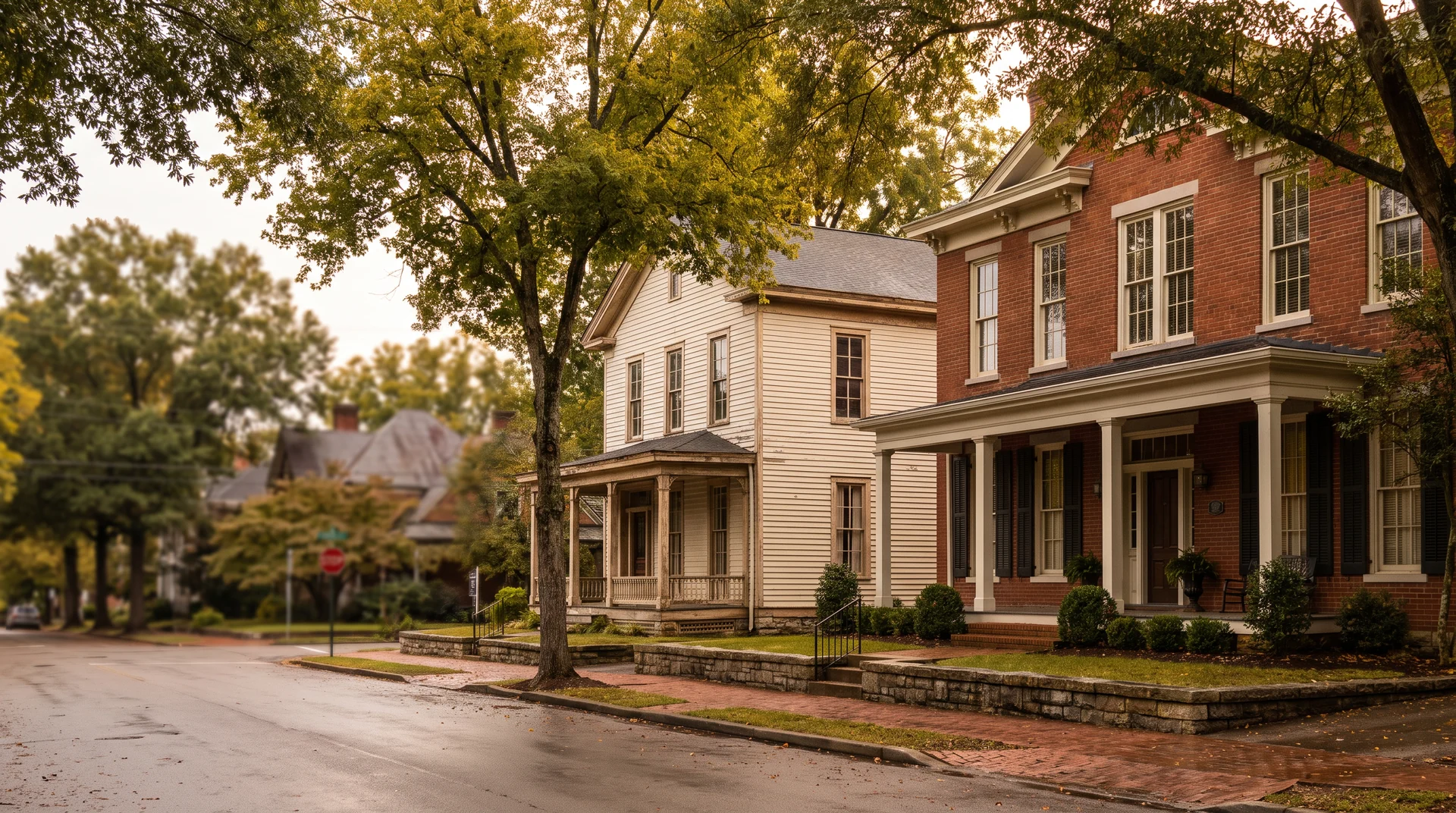
What Should You Know Before Buying a Historic Home in Franklin or Columbia?
A historic home can give you architecture, materials, and a setting that are difficult to reproduce in new construction. It can also require specialized maintenance, a more detailed inspection plan, and city review before certain exterior changes begin.
The right house can be deeply rewarding. The important part is knowing what you are buying. Confirm the property's designation, understand the rules that apply to it, and investigate the home's systems before your contract becomes nonrefundable.
Age alone does not tell you whether a property is locally regulated. A house may be old without being in a historic district. It may be listed in the National Register of Historic Places, sit inside a National Register district, fall within a local historic overlay, be subject to a preservation easement, or have more than one of those conditions.
What Is the Difference Between a National Register Listing and a Local Historic Overlay?
A National Register listing and a local historic overlay are different. The Tennessee Historical Commission describes National Register listing as an honorary designation that does not, by itself, restrict what a private owner may do with a property.
The same state guidance tells owners to check with the local government for zoning or historic overlays. Local historic zoning can regulate exterior changes through a local Historic Zoning Commission and the issuance of a Certificate of Appropriateness.
A recorded preservation easement, deed restriction, or private covenant may create another set of obligations. That is why the title work, deed records, survey, and applicable city rules all matter. Do not rely on a listing description that simply calls the home “historic.”
What Does Franklin's Historic Preservation Overlay Mean for a Buyer?
Franklin uses a Historic Preservation Overlay District and Historic District Design Guidelines to review covered exterior work. The City of Franklin's Certificate of Appropriateness page says new construction, additions, and alterations within the overlay are reviewed for compatibility and protection of historic resources.
The city's current list of work requiring Historic Zoning Commission review includes additions, window alterations or replacement, siding or masonry alterations beyond minor in-kind repair, certain roofing changes, dormers, porches, fences, driveways, exterior mechanical equipment, demolition, and other visible work. Some minor changes may qualify for administrative approval. Other work may not require a Certificate of Appropriateness.
The scope of the project matters. A buyer who wants to replace windows, add a rear room, rebuild a porch, change siding, construct a garage, alter a roofline, or install visible equipment should speak with Franklin preservation staff before treating that plan as feasible.
A Certificate of Appropriateness is not necessarily the only approval. A building permit or another city review may still be required after historic approval. The city encourages applicants to contact preservation staff for initial guidance and offers a voluntary design review process for feedback before a formal application.
What Does Columbia's Historic Zoning Process Mean for a Buyer?
Columbia's official Historic District Design Guidelines identify five locally designated historic districts. The city's Historic Zoning Commission is the review body for local historic preservation, and the Planning and Zoning Division provides staff support.
The guidelines say that changes beyond routine maintenance that affect the exterior appearance of a property in a local historic district require a Certificate of Appropriateness before work begins. Minor projects that meet the guidelines may be approved administratively. Other projects follow the Historic Zoning Commission's meeting and review schedule.
Columbia recommends early coordination with Development Services staff. The city's current application calls for a pre-application meeting, a complete application, supporting plans or photographs, and attendance by the applicant or an authorized representative when commission review is required.
For a buyer, this means a planned exterior renovation should be discussed before closing if it is central to the purchase decision. The city can explain the current process. The buyer's architect, contractor, engineer, or preservation consultant may be needed to determine what the project would require.
What Are the Practical Advantages of Owning a Historic Home?
The appeal starts with the house itself. Older homes may have wood floors, masonry, tall windows, fireplaces, deep porches, detailed trim, plaster walls, and other materials that are expensive or difficult to reproduce.
Some buyers also value the established streetscape and the relationship between the home and a historic downtown. That is a property and location decision, not a guarantee about convenience or future resale.
- Distinctive architecture: Original proportions, millwork, masonry, windows, doors, and porches may give the home a character that newer construction does not copy.
- Repairable materials: Some older wood windows, doors, floors, and trim can be repaired rather than discarded when a qualified craftsperson evaluates them.
- Established setting: Mature trees, older lot patterns, sidewalks, alleys, and a varied streetscape may be part of the property's appeal.
- Design review: Local review can help maintain the exterior character that led to the district's designation.
- Documented history: Prior surveys, designation records, permits, plans, and photographs may add useful context for ownership and future work.
Historic designation does not guarantee appreciation, lower maintenance costs, a tax benefit, or a particular resale result. Each property must stand on its own condition, location, price, restrictions, and buyer demand at the time of sale.
What Added Expenses Should a Historic-Home Buyer Expect?
The added cost is often a collection of smaller projects rather than one dramatic repair. Older components may need more frequent attention, custom materials, or labor from people who understand traditional construction.
- Specialized labor: Plaster repair, masonry repointing, wood-window restoration, metal roofing, decorative trim, and porch repairs may require specialized experience.
- Custom materials: Doors, windows, trim profiles, railings, gutters, and hardware may not match standard sizes or current production details.
- Exterior maintenance: Wood siding, trim, porches, masonry, windows, roofing, flashing, gutters, and drainage need regular observation and timely repair.
- Building-system updates: Electrical capacity, plumbing, HVAC, insulation, air sealing, sewer lines, and other systems may need further evaluation or improvement.
- Design and approval work: A project may require drawings, material specifications, contractor estimates, city review, and permits before construction begins.
- Insurance: A carrier may ask about wiring, plumbing, roof age, heating systems, prior claims, replacement cost, or uncommon materials before offering coverage.
A generic maintenance percentage is not enough for a purchase decision. Build a property-specific budget. Ask contractors to separate immediate safety or water concerns from work that can wait, optional changes, and projects that may require historic approval.
Why Should You Pay Special Attention to Water?
Water can damage an older home slowly and out of sight. Inspect the roof, flashing, gutters, downspouts, grading, crawl space or basement, foundation, chimneys, porches, exterior wood, and masonry.
A drainage problem may show up as peeling paint, soft wood, efflorescence, cracked mortar, damp framing, mold, or movement. The visible symptom may not reveal the full source. Ask the inspector what was observed, what remains inaccessible, and which specialist should investigate further.
Do not assume every old crack or stain is a major defect. Do not dismiss it because the house has been standing for a long time either. The goal is to understand the cause, the current condition, and the likely repair path.
Is a Standard Home Inspection Enough for an Older House?
A general home inspection is the starting point, not always the final step. The age, condition, materials, and observed concerns should determine which additional evaluations make sense.
Depending on the property, the buyer may consider a structural engineer, electrician, plumber, roofer, chimney professional, pest inspector, sewer specialist, environmental professional, or contractor familiar with historic buildings. A home on septic or with an older well needs a different investigation than a house connected to public utilities.
Scope the inspections to the property. Ordering every specialist automatically can add unnecessary expense. Skipping a relevant specialist because the home looks attractive can leave an important question unanswered.
What Environmental Issues Should You Consider in a Pre-1978 Home?
Lead-based paint deserves specific attention in older homes. The U.S. Environmental Protection Agency says renovation, repair, or painting that disturbs painted surfaces in a pre-1978 home can create hazardous lead dust.
The EPA generally requires paid firms performing covered work in pre-1978 housing to be certified and to use lead-safe work practices. The agency recommends that homeowners planning renovation in a pre-1978 home hire a lead-safe certified contractor.
Other questions may include asbestos-containing materials, radon, buried fuel tanks, old wells or cisterns, and environmental conditions tied to prior uses. The appropriate investigation depends on the home and site. Qualified professionals should evaluate a suspected hazard.
Why Should You Review Prior Permits and Historic Approvals?
An attractive renovation can still have missing permits, an unapproved exterior change, incomplete paperwork, or work that concealed rather than corrected a problem.
Ask for available building permits, Certificates of Appropriateness, surveys, plans, repair invoices, warranties, insurance claim information, and contractor records. Compare the documents with what exists at the property.
A missing record does not automatically prove the work was improper. It does create a question that should be addressed with the seller, title professionals, the applicable city office, and other qualified advisers before you decide how to proceed.
Can You Use the Federal Historic Rehabilitation Tax Credit on Your Home?
An owner-occupied private residence generally does not qualify for the federal historic rehabilitation tax credit. The National Park Service says the 20 percent credit is available for qualifying certified historic buildings rehabilitated for income-producing uses, such as rental residential, commercial, industrial, or agricultural property.
Eligibility requires more than owning an old building. The property and project must meet federal requirements, the work must follow the Secretary of the Interior's Standards for Rehabilitation, and the completed building must remain in an income-producing use for the required period.
A mixed-use property or a residence with an income-producing portion may present a different question. Discuss potential eligibility with the Tennessee Historical Commission and qualified tax and preservation professionals before beginning work. Do not purchase a property on the assumption that a tax credit will pay for the renovation.
What Is a Better Due-Diligence Plan for a Historic Home?
- Confirm the designation. Check the city zoning or overlay map, local district boundaries, National Register status, deed restrictions, and any recorded preservation easement.
- Define your plans. List the exterior changes and major building-system updates you would want during the first several years of ownership.
- Talk with city staff. Ask which planned exterior projects may require staff review, a Certificate of Appropriateness, commission review, or another permit.
- Review the property's history. Request available permits, prior Certificates of Appropriateness, surveys, plans, invoices, warranties, insurance claims, and environmental reports.
- Inspect the relevant systems. Focus on structure, water management, roof, masonry, electrical, plumbing, HVAC, sewer or septic, chimneys, pests, and environmental concerns that apply to the home.
- Price the work. Use contractors who understand older homes and ask whether estimates include appropriate materials, design work, permits, and allowances for concealed conditions.
- Confirm financing and insurance. Make sure the lender and insurer understand the property's condition and any repair or replacement issues before the due-diligence deadline.
- Plan for stewardship. Create a maintenance schedule and keep reserve funds for recurring exterior care and future building-system work.
What Questions Should You Ask Before Making an Offer?
- Is the property inside a local historic overlay, a National Register district, or both?
- Is the home classified as contributing or noncontributing to the district?
- Are there deed restrictions, preservation easements, or covenants beyond city zoning?
- Which planned exterior changes may require a Certificate of Appropriateness?
- Were previous additions and renovations permitted and approved?
- Which original systems and materials remain?
- When were the roof, wiring, plumbing, HVAC, sewer line, chimney, and foundation last evaluated?
- Can the home be insured with coverage and terms you consider acceptable?
- Are qualified contractors available for the home's materials and the local review process?
- Does the purchase still work if your preferred renovation is delayed, modified, or denied?
Is a Historic Home the Right Fit for You?
A historic home may fit a buyer who values older architecture, accepts regular maintenance, and is willing to work through a preservation review process when covered exterior changes are planned.
It may be a poor fit if you want every component to be new, need major exterior changes immediately, or do not want the uncertainty that can accompany custom repairs and concealed conditions.
Franklin and Columbia both have older homes and locally regulated historic areas, but the rules and property conditions are address-specific. Start with the Franklin municipality guide or the Columbia community guide, then verify the property itself.
How Can I Help You Evaluate a Historic Home?
If you are considering a historic home in Franklin, Columbia, or another Middle Tennessee community, I can help you organize the real estate side of the due-diligence process. That can include gathering available listing and property records, coordinating inspections, identifying questions for the city, and keeping contract deadlines in view.
I do not replace city staff, inspectors, contractors, engineers, attorneys, tax professionals, lenders, insurers, or title professionals. My role is to help you ask the right property questions early and make a decision with better information.
Call or text me at (615) 955-0450, email kate@katemove.com, or use the contact page to discuss the specific home and renovation plans you are considering.
Important: Historic zoning, building codes, tax rules, insurance requirements, title restrictions, and property conditions can change. Confirm current requirements with the applicable city, qualified inspectors and contractors, your insurer and lender, and legal or tax professionals when needed.